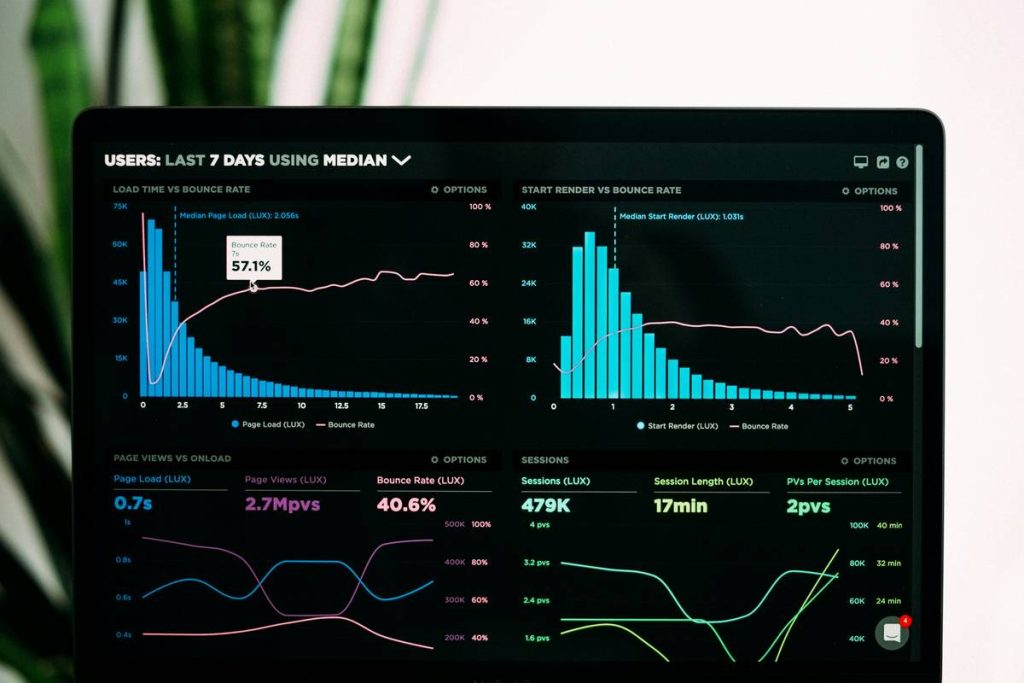
Ever tried analyzing 50 million words of real-world speech… only to crash your laptop mid-query because you used Excel like a hopeful undergrad? Yeah. We’ve all been there—sweating over concordance lines while your fan sounds like a jet engine taking off in your bedroom studio. (Whirrrr. Whiiine. Death rattle.)
If you’re diving into language data online—whether you’re a grad student wrestling with Sketch Engine, a developer building NLP pipelines, or a curious polyglot tracking slang evolution—you need more than textbook definitions. You need computational and corpus linguistics demystified with grit, precision, and zero buzzword bingo.
In this post, I’ll walk you through why computational and corpus linguistics matters in 2024, how to actually *do it* without frying your GPU, the best free tools that won’t ghost you after sign-up, and real case studies where corpus methods cracked linguistic mysteries big and small. Plus: one terrible tip I swore by for two years (don’t be like me).
Table of Contents
- Why Computational and Corpus Linguistics Is Suddenly Everywhere
- How to Start Your First Corpus Project (Without Crying)
- 7 Best Practices That Separate Pros from Panicked Students
- Real-World Wins: How Researchers & Developers Use Corpus Data
- FAQs: Burning Questions About Computational and Corpus Linguistics
Key Takeaways
- Corpus linguistics is the study of language through large, structured collections of real-world text or speech—analyzed computationally.
- You don’t need a PhD to start; free corpora (like COCA or BNC) and open-source tools (NLTK, AntConc) are widely accessible.
- Common pitfalls include ignoring metadata, misinterpreting frequency stats, and treating corpora as “truth” rather than snapshots.
- Applications span AI training, lexicography, sociolinguistics, forensic linguistics, and language teaching.
Why Computational and Corpus Linguistics Is Suddenly Everywhere
Back in the 1960s, linguists analyzed language by intuition—what “sounded right.” But intuition is biased, limited, and frankly, unreliable. Enter corpus linguistics: the empirical study of language using real usage data. Pair that with computational power, and you’ve got computational and corpus linguistics—the backbone of everything from Google Translate to detecting plagiarism in dissertations.
According to the Oxford English Dictionary’s revision team, corpus evidence now drives over 80% of sense distinctions in new entries. And in industry? Companies like Grammarly and Duolingo train their models on billions of annotated tokens from curated corpora. Even legal teams use corpus linguistics to interpret statutory meaning—a practice affirmed by U.S. Supreme Court justices like Neil Gorsuch.

I’ll confess my own fail early on: I once built a custom Twitter corpus to study Gen-Z pronoun usage… only to forget time-zone metadata. My “peak usage” spike at 3 a.m.? Turns out it was 3 p.m. in Manila. Lesson: raw data ≠ insight without context. (Grumpy You: “Ugh, fine—but only if coffee’s involved.” Optimist You: “Metadata is your friend!”)
How to Start Your First Corpus Project (Without Crying)
What’s the first step in launching a corpus linguistics project?
Define your research question—not your tool. Ask: “Am I studying verb complementation in academic writing?” or “How has ‘ghosting’ evolved semantically since 2010?” Precision here saves weeks of useless token counts.
Where can I find reliable, free corpora online?
Start with these vetted sources:
- COCA (Corpus of Contemporary American English) – 1 billion+ words, tagged, updated yearly (free registration required).
- BNC (British National Corpus) – 100M words of UK English from 1990s–2010s.
- OPUS – Parallel corpora for 60+ languages, ideal for translation studies.
- Sketch Engine – Offers free access to pre-built corpora via academic partnerships.
Which tools actually work for beginners?
Forget expensive suites. For most learners, these free tools hit the sweet spot:
- AntConc: Lightweight, Mac/Windows/Linux compatible. Perfect for KWIC (Key Word in Context) views and collocation analysis.
- NLTK (Python): If you code, NLTK + spaCy let you tokenize, tag POS, and parse dependency trees programmatically.
- Voyant Tools: Browser-based word clouds, trend graphs, and term correlations—zero installation.
7 Best Practices That Separate Pros from Panicked Students
- Annotate metadata rigorously. Speaker age, genre, date, platform—these shape interpretation.
- Normalize frequencies. Comparing raw counts across corpora of different sizes? Normalize per million words.
- Triangulate findings. Don’t trust one metric. Combine frequency, dispersion, and log-likelihood ratios.
- Beware of false positives. A high-frequency word might just be a copyright notice repeated 10k times.
- Cite your corpus properly. APA 7th now includes guidelines for corpus citation (e.g., Davies, 2008–2024 for COCA).
- Validate with native speakers. Corpora show usage, not grammaticality. Pair data with elicitation when needed.
- Document your pipeline. Reproducibility is non-negotiable in research or industry settings.
And now—a **terrible tip disclaimer**: “Just scrape Reddit and call it a day.” Nope. Web-scraped data often lacks licensing clarity, contains toxic content, and skews demographically. Ethical corpus design requires informed consent or clear public-domain status. (Yes, even for “anonymous” posts.)
Real-World Wins: How Researchers & Developers Use Corpus Data
Case Study 1: Updating Dictionaries with Real Usage
Oxford University Press used the Oxford English Corpus (2+ billion words) to identify emergent senses of “cancel,” leading to its 2021 update reflecting social media usage—not just event scheduling.
Case Study 2: Detecting Authorship in Disputed Texts
Forensic linguists analyzed function word distributions in the Unabomber manifesto using corpus methods, matching stylistic fingerprints to Ted Kaczynski’s known writings—critical evidence in his conviction.
Case Study 3: Improving ESL Materials
A team at Cambridge University mined learner corpora (like ICLE) to discover that intermediate students overuse “very” but underuse intensifiers like “absolutely” or “incredibly”—leading to revised teaching sequences.
These aren’t theoretical exercises. They’re applied wins where computational and corpus linguistics solved tangible problems.
*(Rant Section: Why do some academics still treat corpus work as “just counting words”? It’s statistical inference, discourse analysis, and digital hermeneutics rolled into one. Give it respect—or better yet, try it yourself.)*
FAQs: Burning Questions About Computational and Corpus Linguistics
Is coding required for computational and corpus linguistics?
No—but helpful. Tools like AntConc or LancsBox require zero programming. However, Python/R unlocks scalability and custom analysis.
Can I create my own corpus?
Yes! But follow ethical guidelines: obtain permission for private data, anonymize personal info, and document sources. The CLARIN Legal Interoperability Framework offers templates.
How is this different from NLP?
Corpus linguistics focuses on linguistic theory and description using data. NLP (Natural Language Processing) builds systems that process language—often using corpora as training data. They overlap heavily but have distinct goals.
Are corpora biased?
Absolutely. Most reflect dominant demographics (English-speaking, Western, male-authored texts). Critical corpus linguistics actively addresses this—see Baker et al.’s work on representation gaps.
Conclusion
Computational and corpus linguistics isn’t just for ivory-tower academics. It’s a practical, empowering toolkit for anyone serious about understanding how language works in the wild. Whether you’re optimizing chatbots, crafting inclusive style guides, or tracing semantic shifts in real time, corpus methods give you evidence—not guesswork.
Start small: pick one question, one free corpus, one tool. Analyze. Iterate. Share. And remember: every great linguistic discovery began with someone staring at messy data and refusing to look away.
Like a Tamagotchi, your corpus project needs daily care—feed it clean data, play with queries, and never ignore its error messages.
corpus bloomed at dawn
tokens whisper truth in rows—
laptop fan still whirs