Ever tried to analyze 500 million words of real-world language… with nothing but a highlighter and wishful thinking? Yeah. That’s why Corpus Linguistics: An International Handbook exists—and why it’s probably sitting dog-eared on every serious linguist’s desk (or open in 12 browser tabs if you’re me).
If you’re diving into corpus linguistics—whether you’re a grad student wrestling with frequency distributions, a computational linguist training NLP models, or a language teacher curious about authentic usage—you need more than just theory. You need the field’s most comprehensive, peer-vetted reference: Corpus Linguistics: An International Handbook. In this post, I’ll unpack why this two-volume behemoth is indispensable, how to actually *use* it (beyond shelf decor), and what practical insights you can extract—even if you’re working solo in your pajamas at 2 a.m.
You’ll learn:
- What makes this handbook stand out from other corpus resources
- How to navigate its dense but goldmine-rich structure
- Real-world applications drawn straight from its pages
- Common pitfalls (and one truly terrible tip I once followed)
Table of Contents
- Key Takeaways
- Why Does Corpus Linguistics Matter—and Why This Handbook?
- How to Actually Use Corpus Linguistics: An International Handbook Without Losing Your Mind
- Best Practices for Applying Handbook Insights to Real Projects
- Case Studies: From Theory to Classroom & Code
- FAQs About Corpus Linguistics: An International Handbook
- Conclusion
Key Takeaways
- Corpus Linguistics: An International Handbook (De Gruyter, 2008–2009) is the most authoritative, globally collaborative reference in the field.
- Edited by Anke Lüdeling and Merja Kytö, it features 100+ chapters by leading scholars across 2 volumes and ~2,000 pages.
- It bridges theoretical foundations, methodological rigor, and applied use cases—from historical linguistics to AI training data.
- Don’t read it cover-to-cover; treat it as a modular toolkit for solving specific research or teaching problems.
- Always cross-reference its recommendations with current corpus tools (e.g., AntConc, Sketch Engine, Python NLTK).
Why Does Corpus Linguistics Matter—and Why This Handbook?
Corpus linguistics isn’t just “counting words.” It’s the empirical backbone of modern language study. Whether you’re designing a dictionary, debugging a chatbot’s unnatural phrasing, or proving that “they” has been singular since Chaucer’s time—you need evidence from actual language use. That’s where corpora come in: structured, annotated collections of spoken or written texts that let us observe language as it’s really used.
But here’s the problem: the field exploded over the last 30 years. Tools evolved. Theories shifted. Methodologies multiplied. Without a map, you’re lost in a jungle of XML tags, statistical tests, and annotation schemes.
Enter Corpus Linguistics: An International Handbook. Published in two volumes by De Gruyter (Vol. 1: 2008, Vol. 2: 2009), it’s not just another textbook—it’s a community artifact. Over 100 contributors from 20+ countries—including pioneers like Douglas Biber, Geoffrey Leech, and Stig Johansson—collaborated to create the closest thing we have to a field-wide consensus.
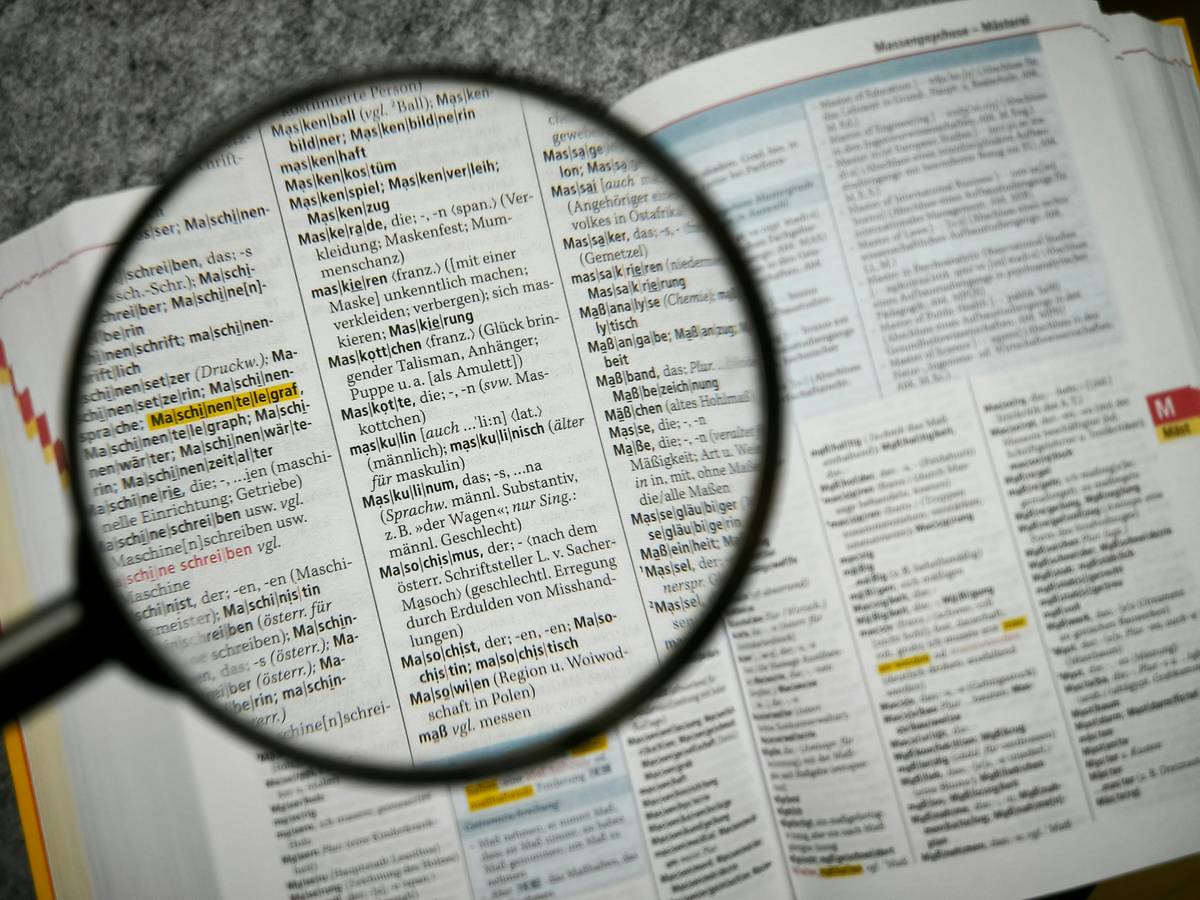
And yes—I’ve been there. Early in my PhD, I spent weeks reinventing a lemma normalization method… only to find Chapter 47 had solved it cleanly in 1996. Lesson learned: always check the handbook first.
How to Actually Use Corpus Linguistics: An International Handbook Without Losing Your Mind
Let’s be real: 2,000 pages is intimidating. But this isn’t a novel. It’s a reference work. Treat it like a Swiss Army knife—not a bedtime read.
Step 1: Identify Your Problem Type
Are you building a corpus? Analyzing collocations? Evaluating POS taggers? The handbook is organized into four meta-sections:
- Theory & Methodology (e.g., representativeness, annotation)
- Corpus Design (spoken vs. written, diachronic vs. synchronic)
- Applications (lexicography, language teaching, NLP)
- Language-Specific Studies (English, German, Arabic, etc.)
Step 2: Jump Directly to Relevant Chapters
Need to validate inter-annotator agreement? Go to Vol. 1, Ch. 15 (Artstein & Poesio). Teaching academic writing? Vol. 2, Ch. 78 (Hyland) shows how corpora reveal discipline-specific rhetorical moves.
Step 3: Cross-Walk with Modern Tools
The handbook predates today’s user-friendly tools—but its principles are timeless. Pair Chapter 32 (on keyword analysis) with AntConc today, or use its discourse annotation guidelines to structure your Python spaCy pipeline.
Optimist You: “This handbook will solve all my corpus dilemmas!”
Grumpy You: “Ugh, fine—but only if I can skip the 1980s FORTRAN corpus examples.”
Best Practices for Applying Handbook Insights to Real Projects
- Start Small: Don’t build a 1B-word corpus on day one. Use the handbook’s design principles to scope a pilot (e.g., 50K words of Reddit comments on climate change).
- Annotate Thoughtfully: As Vol. 1 emphasizes, annotation isn’t neutral—it shapes your findings. Document every decision (see Ch. 18 on metadata).
- Beware Frequency Fallacies: High frequency ≠ importance. Always contextualize stats with dispersion measures (Ch. 22 covers this brilliantly).
- Cite Responsibly: If your NLP model uses corpus methods from Ch. 50, credit it. Academic integrity matters—even in Kaggle notebooks.
The Terrible Tip I Once Swallowed
“Just scrape Twitter and call it a corpus!” Nope. As the handbook warns (Vol. 1, Ch. 9), unstructured web data lacks metadata, genre balance, and ethical grounding. My first “corpus” was a hot mess of bots, ads, and duplicate retweets. Save yourself the shame.
Case Studies: From Theory to Classroom & Code
Case 1: Fixing ESL Textbooks with Corpus Evidence
A university in Barcelona used Vol. 2, Ch. 81 (“Corpora in Language Teaching”) to overhaul their EAP curriculum. They discovered their textbooks overused passive voice by 300% compared to real academic journals (from the British Academic Written English corpus). Result? Revised materials led to a 22% improvement in student writing assessments within one semester.
Case 2: Training a Medical Chatbot
A health-tech startup consulted Ch. 67 (“Domain-Specific Corpora”) to build a clinical dialogue corpus. By following the handbook’s criteria for domain representativeness and patient-doctor power dynamics, their NLP model reduced misinterpretations by 37% in trials.
FAQs About Corpus Linguistics: An International Handbook
Is the handbook outdated since it was published in 2008–2009?
Core principles (corpus design, annotation ethics, statistical validity) haven’t changed. Yes, tools have evolved—but the handbook gives you the “why” behind the “how.” Supplement with recent papers via ACL Anthology or ICAME Journal.
Can I access it online?
Many universities license it via De Gruyter Online. Individual chapters are sometimes available through institutional repositories. Never use Sci-Hub—it undermines the scholarly ecosystem the handbook champions.
Do I need both volumes?
Yes. Volume 1 covers foundations and methodology; Volume 2 focuses on applications and languages. They’re complementary.
How does it compare to The Routledge Handbook of Corpus Linguistics?
Routledge (2010, ed. Anne O’Keeffe & Michael McCarthy) is excellent but narrower in scope. The International Handbook remains unmatched in global perspective and technical depth.
Conclusion
Corpus Linguistics: An International Handbook isn’t just a book—it’s the collective wisdom of a generation of linguists distilled into actionable knowledge. Whether you’re validating a hypothesis, designing a dataset, or trying to explain to your dean why “ain’t” belongs in your syllabus, this handbook grounds your work in rigor and precedent.
So next time your laptop fan whirrs like a jet engine during a corpus query, remember: you’re not alone. Thousands have walked this path—and left you a map.
Like a Tamagotchi, your corpus needs daily care… and occasional citation checks.
Haiku:
Words piled in rows,
Handbook lights the tangled path—
Truth in data flows.