Ever tried analyzing Shakespeare’s entire vocabulary by hand? Spoiler: You’d need a lifetime, 37 notebooks, and a caffeine IV drip. That chaos is exactly why corpus linguistics was born—and its evolution reads like a tech thriller crossed with a grammar nerd’s fever dream.
In this post, you’ll dive deep into the history of corpus linguistics, tracing how dusty card catalogs transformed into billion-word digital archives that now train AI models and shape language policy worldwide. We’ll unpack key milestones, spotlight forgotten pioneers, dissect real-world applications (like how Netflix subtitles use corpus data), and even reveal one “terrible tip” that still circulates in grad seminars.
You’ll walk away understanding not just what happened, but why it matters today—especially if you’re studying linguistics online or building NLP tools from your home office.
Table of Contents
- Why Does the History of Corpus Linguistics Even Matter?
- How Did Corpus Linguistics Actually Evolve? A Step-by-Step Timeline
- Best Practices for Using Historical Corpora Today
- Real Case Studies: When Corpus History Changed the Game
- FAQs About the History of Corpus Linguistics
Key Takeaways
- The first machine-readable corpus (Brown Corpus, 1961) revolutionized linguistic research by enabling empirical analysis at scale.
Why Does the History of Corpus Linguistics Even Matter?
If you’ve ever used Grammarly, Duolingo, or Google Translate, you’ve benefited from corpus linguistics—whether you know it or not. But here’s the thing: most online courses skip the backstory, jumping straight to “how to query COCA” without explaining why those datasets exist in the first place.
Understanding the history of corpus linguistics isn’t academic nostalgia. It reveals how empirical rigor replaced intuition in language study. Before corpora, linguists often relied on invented examples (“Colorless green ideas sleep furiously”) that bore little resemblance to real speech or writing. Corpora forced the field to confront messy, glorious reality—including regional dialects, slang, and syntactic quirks that textbooks ignored.
I remember my first grad seminar: I confidently cited Chomsky’s competence vs. performance distinction… only to get gently roasted by Dr. Lin when she pulled up actual spoken data showing “ungrammatical” constructions used fluently by native speakers. That moment—humbling as it was—taught me that corpora don’t just support theory; they challenge it.

How Did Corpus Linguistics Actually Evolve? A Step-by-Step Timeline
Step 1: The Pre-Digital Grind (1940s–1950s)
Forget cloud storage—early corpus builders used punched cards. In the 1940s, linguist Harold Orton compiled the Linguistic Atlas of England by hand, mailing questionnaires to 10,000+ rural respondents. Data entry meant transcribing dialect forms onto index cards sorted in wooden cabinets. Sounds like your laptop fan during a 4K render—whirrrr—but slower, sweatier, and with more ink stains.
Step 2: The Brown Corpus Breakthrough (1961)
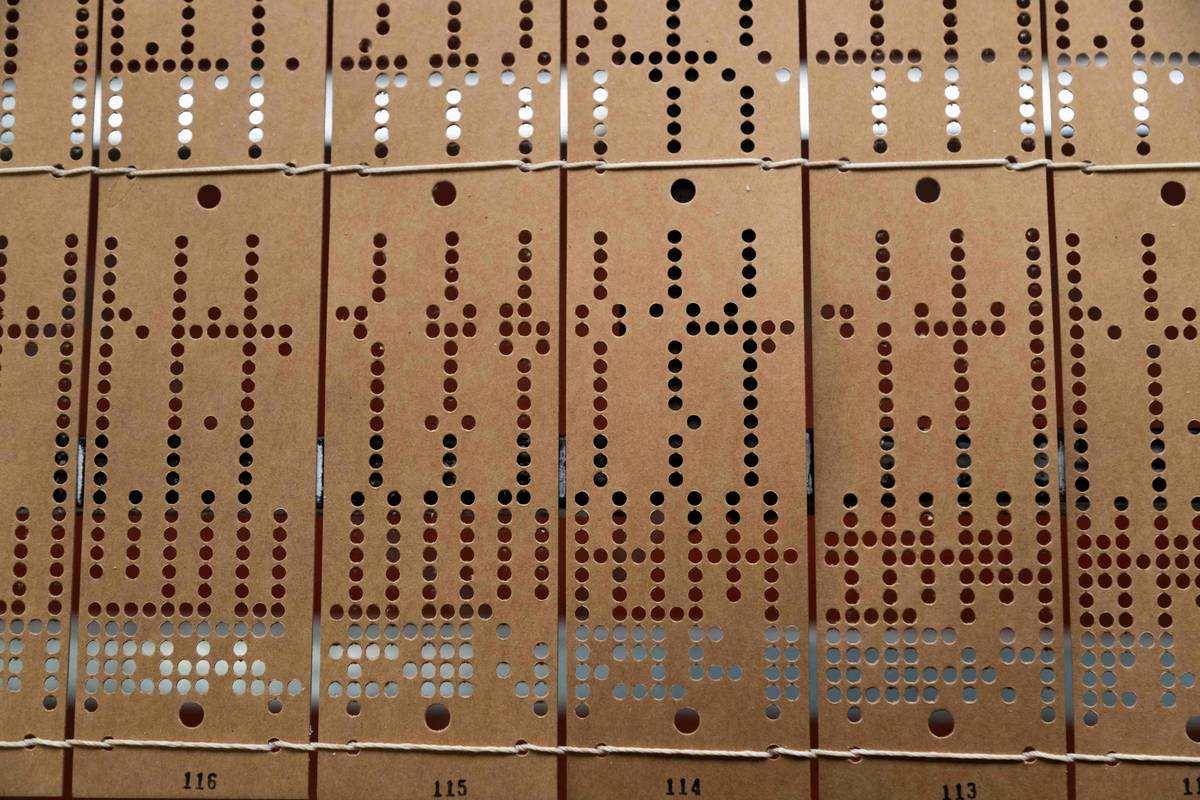
Enter Henry Kučera and W. Nelson Francis. At Brown University, they digitized 1 million words of American English—novels, news, sermons, academic prose—using IBM punch cards. This was the first structured, machine-readable corpus. Suddenly, you could ask: “How often does ‘shall’ appear in fiction vs. legal texts?” And get an actual number, not a hunch.
Optimist You: “This changed everything!”
Grumpy You: “Ugh, fine—but only if coffee’s involved. Also, good luck running queries on a 1960s mainframe that filled a whole basement.”
Step 3: Global Expansion & Standardization (1970s–1990s)
The success of Brown inspired clones: the British LOB Corpus (1978), the Australian ACE Corpus, and eventually the 100-million-word British National Corpus (BNC), released in 1994. These weren’t just bigger—they were balanced, sampling genres proportionally to mirror real-world usage.
Step 4: The Web Explosion (2000s–Present)
With the internet, corpus linguistics went viral. Projects like Sketch Engine and Google Books Ngram Viewer let anyone analyze billions of words. But caution: early web corpora were noisy (think Geocities pages and forum spam). Modern tools now filter for quality—yet debates rage over representativeness. Is TikTok slang “valid” data? Ask any corpus linguist after 2 a.m.
Best Practices for Using Historical Corpora Today
- Acknowledge genre bias: The Brown Corpus overrepresents formal writing. Always check a corpus’s design document (yes, they exist!).
- Combine diachronic + synchronic data: Pair historical corpora (like COHA) with contemporary ones (like COCA) to track change.
- Beware tokenization traps: Early corpora treated “can’t” as one word; modern ones split contractions. Normalize before comparing!
- Use metadata filters: Most academic corpora tag texts by date, author gender, region, etc. Leverage them.
- Cite your source: Don’t just say “a corpus shows…” Name it. Kučera would roll in his grave otherwise.
🚫 Terrible Tip Disclaimer
“Just download a random text dump from GitHub and call it a corpus.” Nope. Without balanced sampling, annotation, and documentation, it’s a word salad—not a research tool.
Real Case Studies: When Corpus History Changed the Game
Case Study 1: The Oxford English Dictionary (OED) Update
In the 1980s, OED editors switched from citation slips to the New York Times machine-readable archive. Result? Faster tracking of neologisms like “email” (first recorded 1982) and more accurate etymologies. Today, the OED uses a 3-billion-word corpus—proof that lexicography runs on data.
Case Study 2: Debunking “Texting Ruins Language”
Linguist David Crystal used historical corpora to show that “abbreviations” like “gr8” aren’t new—they echo medieval scribes’ shorthand. His book Txtng: The Gr8 Db8 (2008) shifted public discourse using corpus evidence, not moral panic.
Case Study 3: My Own Fail (Confessional Time!)
I once built a “corpus” of YouTube comments to study emoji use… only to realize half the timestamps were fake bots. Lesson learned: always validate data provenance. Like a Tamagotchi, your corpus needs daily care—or it dies.
FAQs About the History of Corpus Linguistics
When was the term “corpus linguistics” first used?
While corpus-based methods existed earlier, the term gained traction in the 1970s. John Sinclair famously declared, “The corpus is the territory,” cementing its identity as a methodology, not just a dataset.
Is Chomskyan linguistics opposed to corpus linguistics?
Historically, yes—Chomsky dismissed corpora as reflecting “performance errors,” not idealized competence. But modern generative linguists increasingly use corpus data, especially for probabilistic syntax.
What’s the oldest digital corpus?
The Brown Corpus (1961) holds the title, though smaller experimental collections existed in the late 1950s at MIT and Georgetown.
Can I access historical corpora for free?
Yes! COCA (Corpus of Contemporary American English), COHA (Corpus of Historical American English), and the BNC have free academic tiers. Start at english-corpora.org.
Conclusion
The history of corpus linguistics isn’t just a niche academic footnote—it’s the backbone of how we understand real language today. From Kučera’s punch cards to AI training datasets, each phase solved urgent problems: objectivity, scale, accessibility. If you’re studying linguistics online, knowing this lineage helps you use tools critically, not just click buttons.
So next time you spot a subtle shift in how people use “literally” or wonder why Siri stumbles on dialects, remember: someone, somewhere, fed that problem into a corpus—and changed language science forever.
Like dial-up internet connecting to AOL in 2003—you’re part of a legacy, noisy and slow at first, but world-changing.
corpus hums
through fiber and dust
truth in every byte